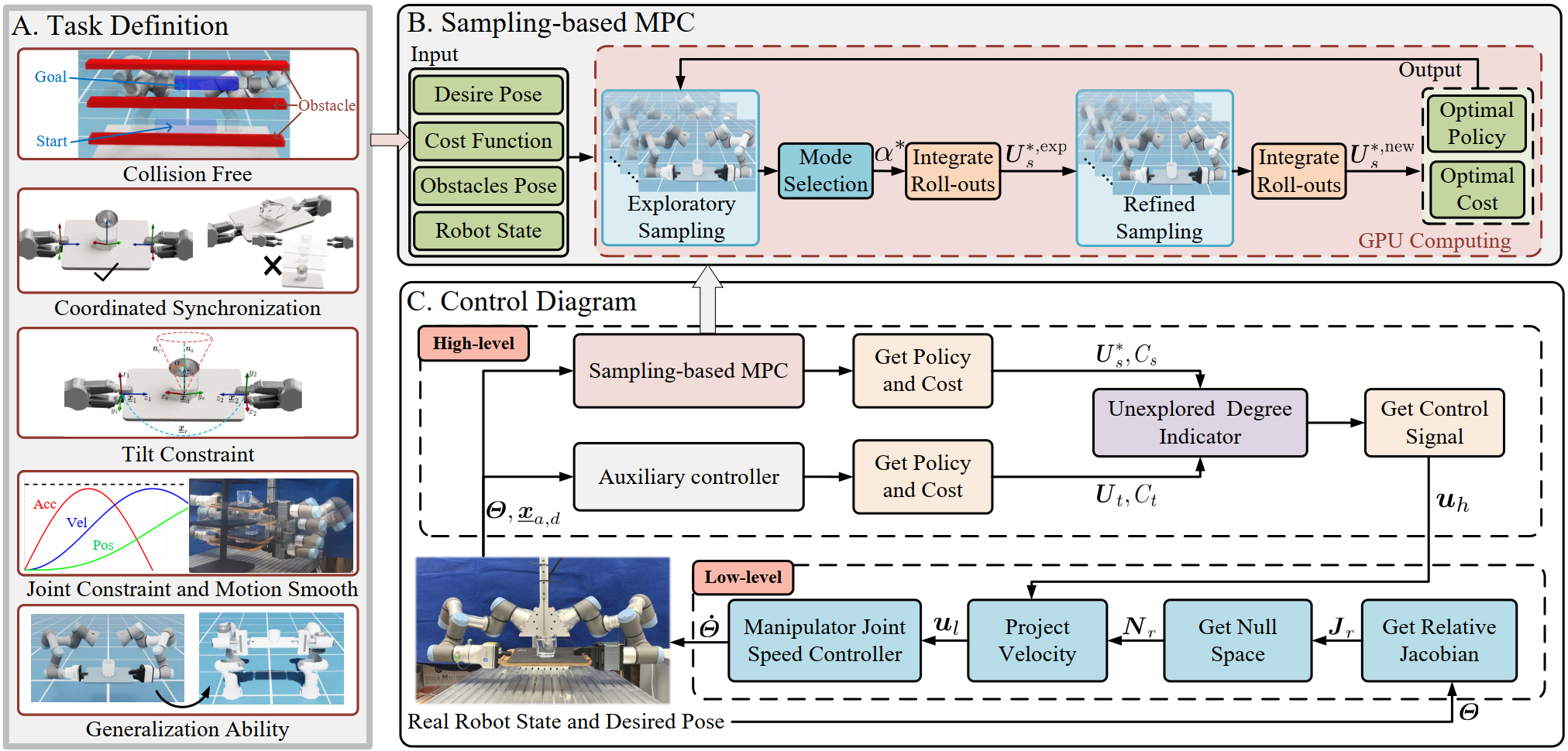
The capabilities of the framework we propose
1. Avoid External and Self-Collisions: Guarantees seamless navigation free from contact with external obstacles or the robot's own components, leveraging dynamic path planning techniques.
2. Prevent Joint Overextension: Actively monitors and regulates joint movements to ensure they remain within mechanical constraints, thus preserving the integrity of the system.
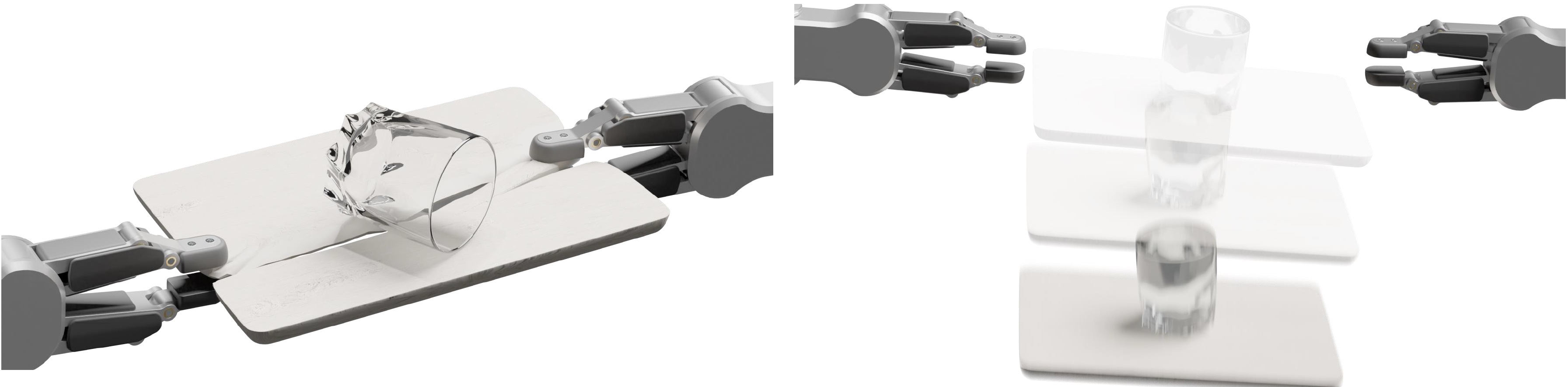
3. Synchronize Dual Arms: Seamlessly coordinates the operations of both arms to ensure synchronized and precise performance in executing complex tasks, avoiding situations like the one depicted in the image below.
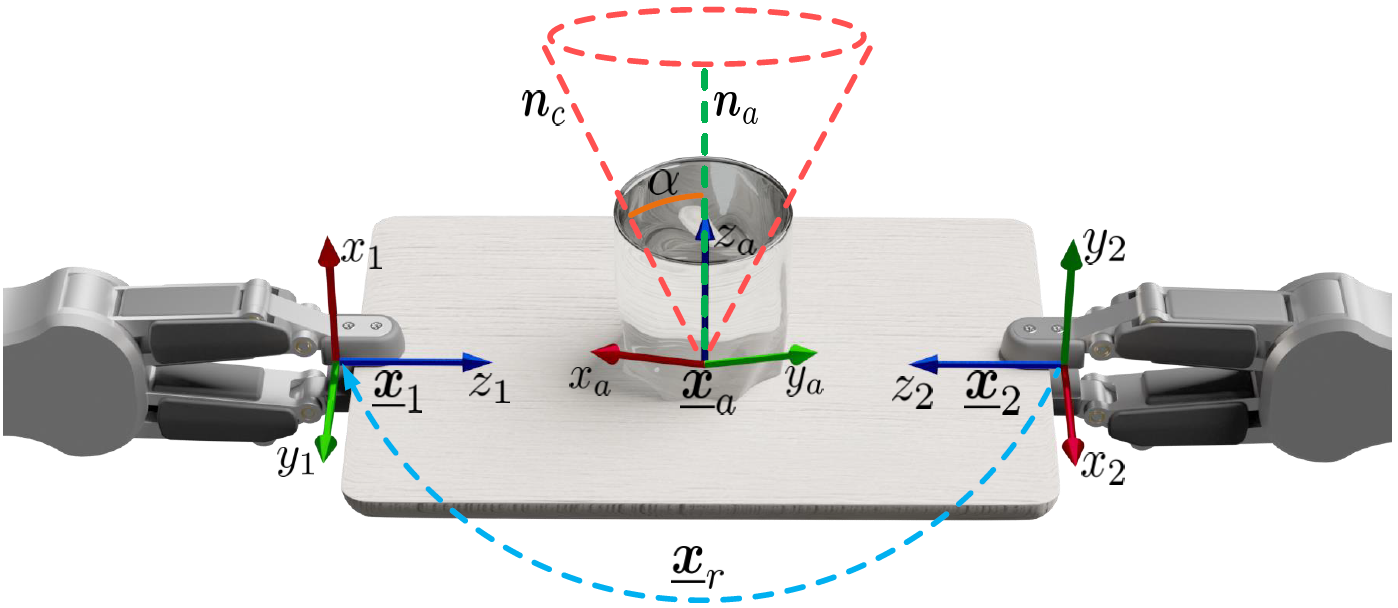
4. Maintain Absolute Pose Constraints: Maintains strict angular constraints to ensure items, such as a cup filled with water on a plate, remain upright and prevent spilling.
5. Ensure Smooth Operation: Carefully manages the acceleration and deceleration of the robotic arms to minimize sudden movements, thereby preventing the contents, such as water in a cup, from spilling.
6. Enable Real-Time Computation: Facilitates rapid computational processes that are critical for immediate response and adaptation to dynamic environments and unforeseen changes.
7. Generalization Ability of the Controller: The controller can implement corresponding control for different types of dual arms, as demonstrated in the video sequences below and at the beginning. Different types of robotic arms can successfully perform obstacle avoidance.